Your brain has a peak hour.
We find it.
Your sharpest thinking happens in a narrow window each day — usually not when you've scheduled your hardest work.
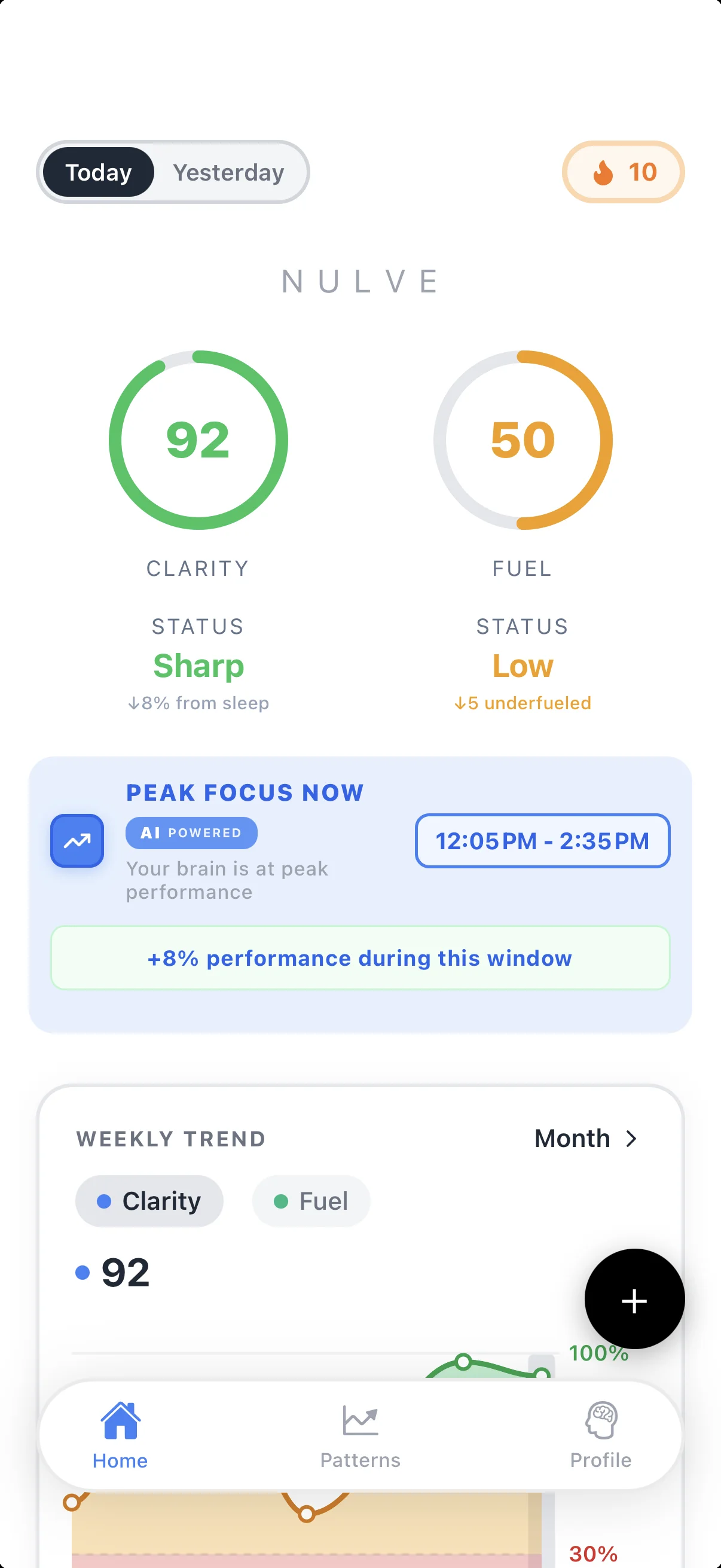
Nulve connects your nutrition, sleep, and cognitive performance to predict when your mind is most likely sharpest — so you can do your best work then.
For the people who pay for sharper days.
Three inputs. One model. One answer.
When your brain peaks today — built from your data.
Feed it signals
Snap your meals. Sleep syncs from Apple Health. Four short tests measure how your brain is actually performing — about 5 minutes a day.
It learns your pattern
Nulve correlates what you ate and how you slept against your measured scores — not how you feel, how you test. Within weeks, it knows your pattern.
Get your window
Each morning, one output: the 2–3 hours your brain is most likely at its sharpest. Put your hardest work there.
No guesswork. No willpower. Just your own data, read back to you.
Your brain performs differently every day.
Nulve finds the pattern.
Built for Peak Performers
Solo Founders
You're running on fumes and making decisions that could make or break your company. The problem isn't your work ethic. It's that you're doing your hardest thinking at your worst hours. Nulve finds the 2–3 hours a day when your brain is actually sharp and tells you what to put in them.
Students
The students hitting top scores aren't studying more than you. They're studying at the right time. Nulve shows you when your brain absorbs and retains the most — so every hour you put in actually counts toward the grade, not just the hours logged.
Remote Workers
You have something office workers don't — full control over your calendar. Nulve gives you the data to use it properly. Know when to block deep work, when to take meetings, and when to step away. Then let the results follow.
Precision tools, built from your data
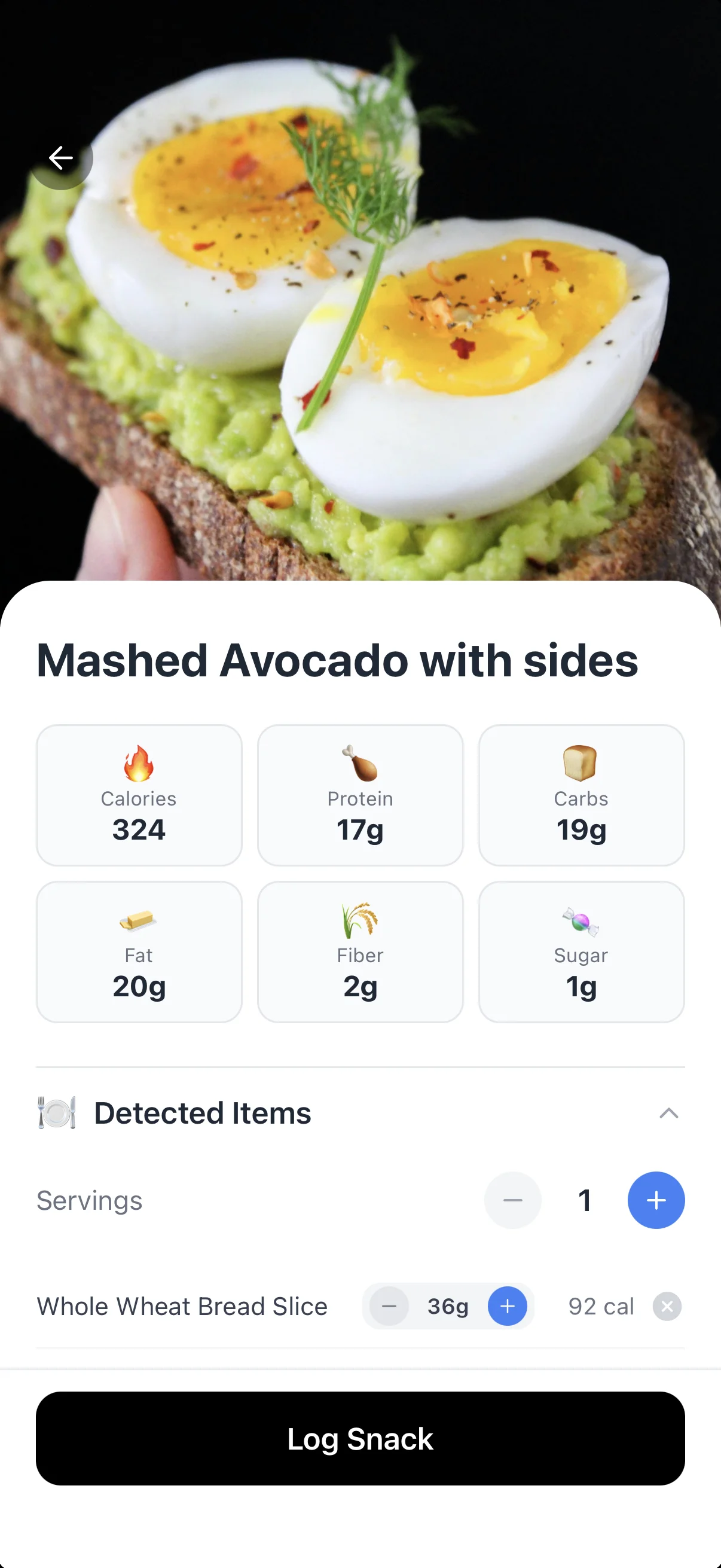
Snap & analyze
Point. Shoot. Done. AI scores your meal's effect on focus in seconds — no logging, no searching, no willpower required.
Find your daily focus window
Most people guess. Founders block 9am because it feels productive. Students grind at midnight hoping it sticks. Nulve predicts your Deep Focus Window daily — based on what you ate, how you slept, and your cognitive scores. One time slot. Built from your data, not gut feel.
A coach that knows your data
Ask why your focus dropped. Ask what fueled your sharpest day this month. Nulve's AI doesn't guess — it pulls from your real Clarity Scores, meals, and sleep to surface patterns you can't see on your own. Personalized answers, grounded in your actual performance data.
Four tests. About 5 minutes. Daily clarity.
Reaction time. Processing speed. Working memory. Attention control. Each test measures a different dimension of your cognitive performance. Together they give you one honest Clarity Score for the day.
The science inside
Four tests used in research for decades. Inside one app.
Nulve's Clarity Score is built on four cognitive tests that researchers have used in sleep, attention, and memory studies for decades. Together they take about 5 minutes a day. Each one measures a different part of how your brain is performing right now — not how you think it's performing.
PVT
A tap test used for decades in sleep and fatigue research. Measures how fast your brain reacts under pressure.
catch the morning decisions that feel sharp but aren't.
N-Back
A standard tool in cognitive neuroscience. You hold patterns in your head while new ones come in.
see if a study block is sticking, or just feeling productive.
Flanker task
A classic from cognitive psychology. Measures how well your brain blocks distractions.
catch the moment tabs and Slack start eating your focus.
Symbol match
A symbol-pairing task adapted from cognitive research. Measures how fast your brain processes information under time pressure.
see if your brain still processes at full speed when the pressure spikes.
Reads your sleep automatically through Apple Health. No wearable needed.
Nulve is not a medical device. It does not diagnose, treat, or cure anything. The tests are research-grade. The decisions are yours.